Dawid Kowalczyk

Four years designing for developers taught me one thing: if you want to build a good tool, you have to stand in the developer's shoes. That means reading code, writing specs, and using the same tools they use.

Dawid Kowalczyk


Years of
experience
driving design processes from research to handoff in complex domains engaging domain experts, collaborating with stakeholders, partnering closely with engineers, and facilitating design thinking.
Improved the developer experience (DX) for engineering teams using Ocado’s internal developer platform, which supports the delivery of solutions for Ocado’s partner. Key projects:
Design touchscreen interface for QIAstat-DX Rise, a high-throughput diagnostic instrument used by laboratory technicians in clinical environments.
Designed a back-office web application that supports the full hiring and job offer lifecycle, from offer creation through candidate tracking and application management.
Back-office document management system designed to reduce friction and standardize the loan approval process across business units.
Back-office application for e-learning and career development management, serving learners and managers with distinct but complementary workflows.
An internal developer platform used by engineers to build software solutions across the full software development lifecycle (SDLC). Working at project:
A touchscreen interface for high-throughput medical diagnostic instruments used by lab technicians in regulated clinical settings.
A back-office web application designed to streamline multi-role recruitment workflows and job offer management.
A back-office document management system engineered to standardize loan approval workflows across business units.
An enterprise career management system designed to coordinate learning, skill mapping, and professional growth across organizations.
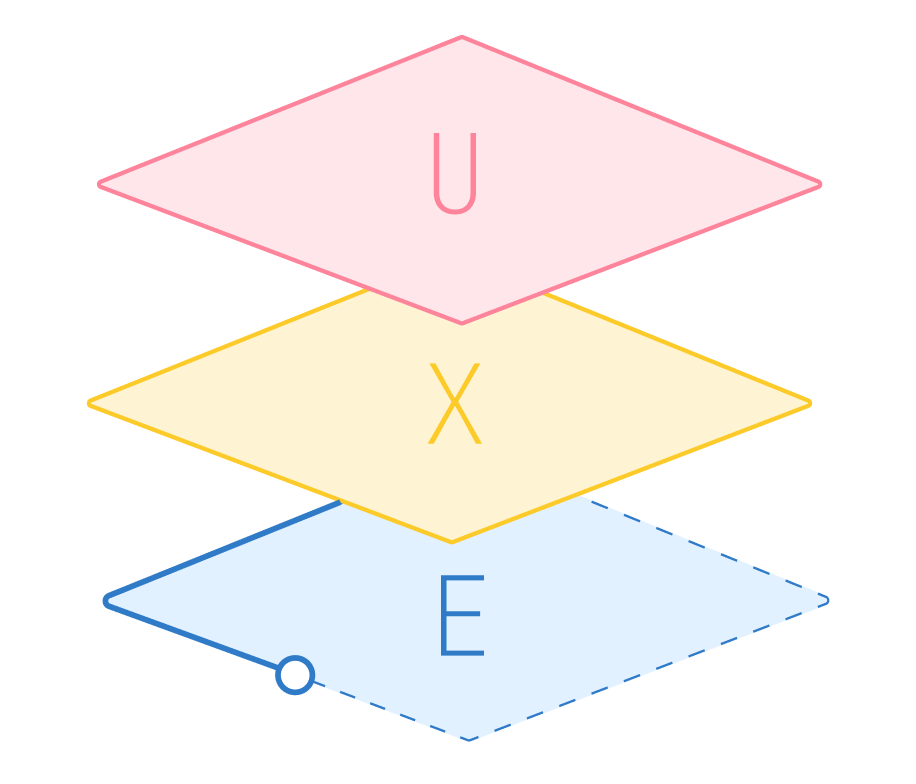
I apply proven frameworks like Jobs-to-be-Done (JTBD) for user research, the Double Diamond for structured problem solving, and Agile for continuous delivery with engineering teams. In my workflow, I operate across three distinct spaces:


Each domain taught me the same thing: complex systems punish shallow understanding. Engage experts, learn their language, understand their world, then design.

Optimized the developer experience across two layers: systemic findability and content depth. I designed a unified UI to streamline multi-tool search, while leveraging the Diataxis framework to make complex documentation highly comprehensive and structured


Scaled a legacy instrument interface onto a larger, fully automated display framework to optimize core laboratory throughput. Powered by a unified design system built for all devices, the new high-density UI was designed with the goal of speeding up sample loading and reducing the physical time operators spend at the machine.

Three reasons:
01. Speak my users' language, not translate it secondhand.
02. Feel the constraints myself.
03. Catch what gets lost in handoff, before it gets lost.

UXE Education is where I explore the space between design and engineering. I write code, break things, and figure out what each side actually needs from the other — not to become an engineer, but to design like someone who understands what someone is asking for.